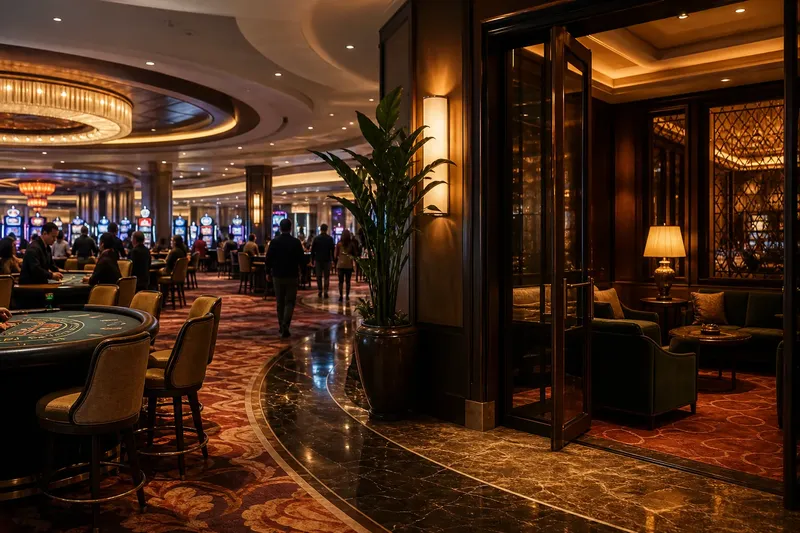
How the Casino Image Changed from Private Rooms to Public Spectacle
The history of the casino image explains how private gaming rooms became familiar screen settings, and helps you separate historical detail from dramatic invention.
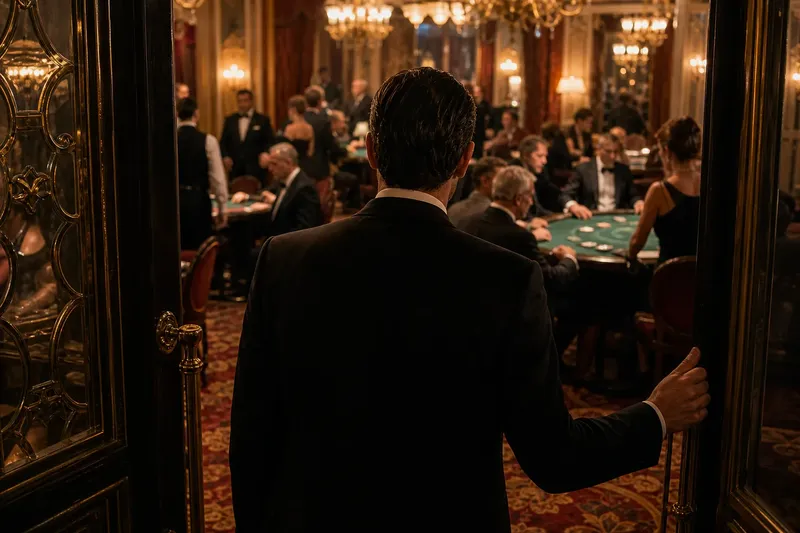
A character steps through a doorway into a room of card tables, polished shoes and watchful faces. The history of the casino image is visible in that entrance: stories have repeatedly used gaming rooms to show who belongs, who is being watched and what someone hopes to gain.
Those scenes draw on real places, but they are not a record of every venue or period. The word “casino” has described different kinds of leisure spaces in different contexts, while artists and filmmakers have freely reshaped their details. Keeping those strands apart makes the familiar screen image more interesting, not less.
Early casino spaces combined gaming with other leisure
In parts of Europe, the word “casino” was used for a house or gathering place for leisure; its meaning depended on context and period. Such a label does not, by itself, tell us that every place was a gambling hall, or that people used the word in precisely the same way across regions.
Venice’s Ridotto offers a more specific historical example. Opened in the eighteenth century as a regulated gambling house, it operated during the carnival season. Its rules and setting made it a distinctive social institution, but it should not be treated as a template for every European gaming room or for later casinos.
For a storyteller, an enclosed or selective venue offers an easy social threshold. A character who enters may be seeking status, company or concealment. That is an interpretive use of the setting, rather than a claim that all historic gaming spaces shared the same atmosphere.
Print and painting made gaming rooms available to viewers
A painting can arrange a gaming table so that the viewer notices what a player misses: a tense expression, a conversation at the edge of the room or an uneasy exchange. The artist’s choices turn a group of people into a scene about manners and motives.
Engravings and illustrations carried such scenes beyond the rooms they depicted. Some presented fashionable play; others used it for satire or moral warning. Readers could recognise the dramatic ingredients—money at stake, manners under pressure and uncertainty about what people intend—without having visited a gaming venue themselves.
Screen stories still use similar visual cues. A close-up of a hand or a glance across a table can create tension before the audience knows the rules. Like props in a theatre, these details help establish a mood, but they do not prove that a real venue looked or felt the same.
Popular entertainment gave the casino several meanings
Travel writing, journalism and fiction helped audiences imagine leisure destinations beyond their own neighbourhoods. In those accounts, a casino might suggest an evening out, a resort, a meeting with strangers or a chance to change one’s fortunes. The meaning depended on the writer and the place being described.
Some accounts framed play as sociable recreation; others focused on temptation, debt or unstable status. Those contrasting portrayals made the casino useful in fiction. A bright room could promise glamour in one story and expose reckless behaviour in another.
The setting can also bring public performance and private motive into the same scene. A character may dress carefully and speak with ease while concealing fear or uncertainty. That contrast is a storytelling device, not a reliable description of everyone who visited such places.
Film turned the casino into a compact visual signal
Cinema can establish a gaming setting with a few details: felt on a table, formal clothing, low conversation or a glass catching the light. These choices help viewers recognise a world associated with money and risk before the plot explains itself.
Crime films and thrillers often use the venue to bring strangers, observation and uncertainty together. A visitor may be watched by a rival or drawn into a tense meeting. The polished surroundings sharpen the contrast with the suspicion beneath them, but this is a screen convention rather than a universal history of casino interiors.
Other films use the same setting for romance, comedy or spectacle. The casino need not be a warning about gambling; it can simply give characters a place to perform a different version of themselves. Like a costume at a party, the setting can suggest transformation without telling us what a person is really like.
Television and celebrity culture made the image more familiar
Television brought casino settings into domestic viewing through fictional scenes, competitions and celebrity appearances. Viewers could become familiar with the image without learning the customs of any particular venue.
Celebrity coverage also connected casinos with nightlife and public spectacle. In a story, a recognisable performer can make a scene feel like an event. Bright signs, cameras and a watching crowd may stand in for the setting itself, even when the game receives little attention.
That shorthand tells us what a programme wants the audience to notice: excitement, status, access or a moment unfolding in public. It does not necessarily tell us how people behave in ordinary gaming rooms.
What does the casino image suggest in a story?
Why does a casino scene often look glamorous?
Formal clothing, attentive service and composed interiors can suggest ceremony on screen. Those are artistic choices, not a complete account of how every venue or visitor appears.
Why do crime stories use casinos?
A gaming room can place strangers, money and uncertainty in one scene, making it useful for plots about trust or concealment. The setting helps a writer stage a meeting or bluff without a long explanation.
Does a screen casino reflect a real historical place?
Sometimes a production draws on a particular period or venue, but fictional rooms often combine details from different sources. Check the work’s stated setting and production notes before treating a visual detail as historical evidence.
How can I tell history from dramatic invention?
Ask what period the story depicts and whose viewpoint shapes the scene. Then distinguish documented details from choices made for atmosphere, such as lighting, costume or music.
Screen conventions can make invention feel historical
Repeated images can seem timeless even when they belong to a particular film tradition. A story may present evening dress, secrecy or elaborate interiors as universal features, although styles and social expectations varied. The label “casino” may also be applied loosely to settings borrowing from clubs, hotels, theatres or private rooms.
Imagine a viewer watching a period drama in which every guest wears formal evening clothes and every conversation feels secretive. The viewer then sees a different kind of gaming venue and notices that the film communicated a mood, not a universal record. That distinction helps keep visual convention separate from historical evidence.
For a more grounded reading, note the period represented, the creator’s likely purpose and the setting’s role in the plot. A story about status may focus on dress and access; a thriller may favour suspicion. Neither angle needs to represent the full history of gaming spaces.
The history of the casino image turns on who is watching
Across private gatherings, printed scenes, films and television, visibility has remained a recurring theme. Characters enter, observe, perform and judge one another. The game supplies the occasion, while the social encounter often carries the story’s larger meaning.
The history of the casino image is not a simple progression from secrecy to spectacle. It is a set of changing portrayals shaped by the places described and the storytellers who depict them. When a casino appears on screen, notice who is allowed to watch and who becomes the object of attention; that small question can reveal what the scene treats as valuable, risky or worth hiding.